Don't build your safety on a chain of thought you don't own
July 2026 · Bouletteproof engineering
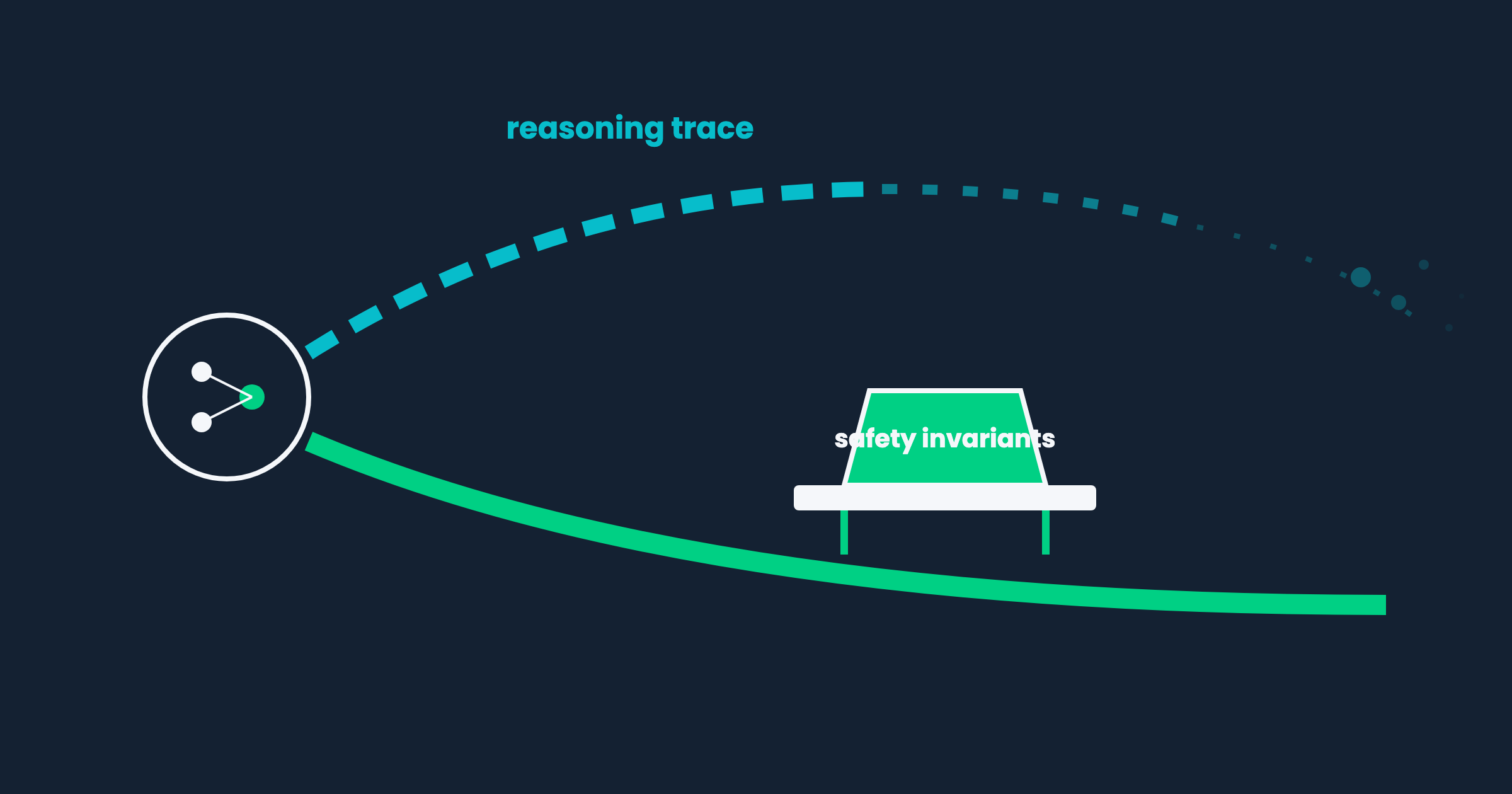
When frontier models began reasoning step-by-step in public, it felt like a triumph for safety and debuggability. For the first time, we could watch the model think before it acted. We could see it spot its own errors, weigh trade-offs, and correct course in real time. But there is a dangerous catch: if you are running your workloads on third-party APIs that do not expose the raw reasoning trace, you do not own the safety of your system. You are building on a foundation of faith, not verification.
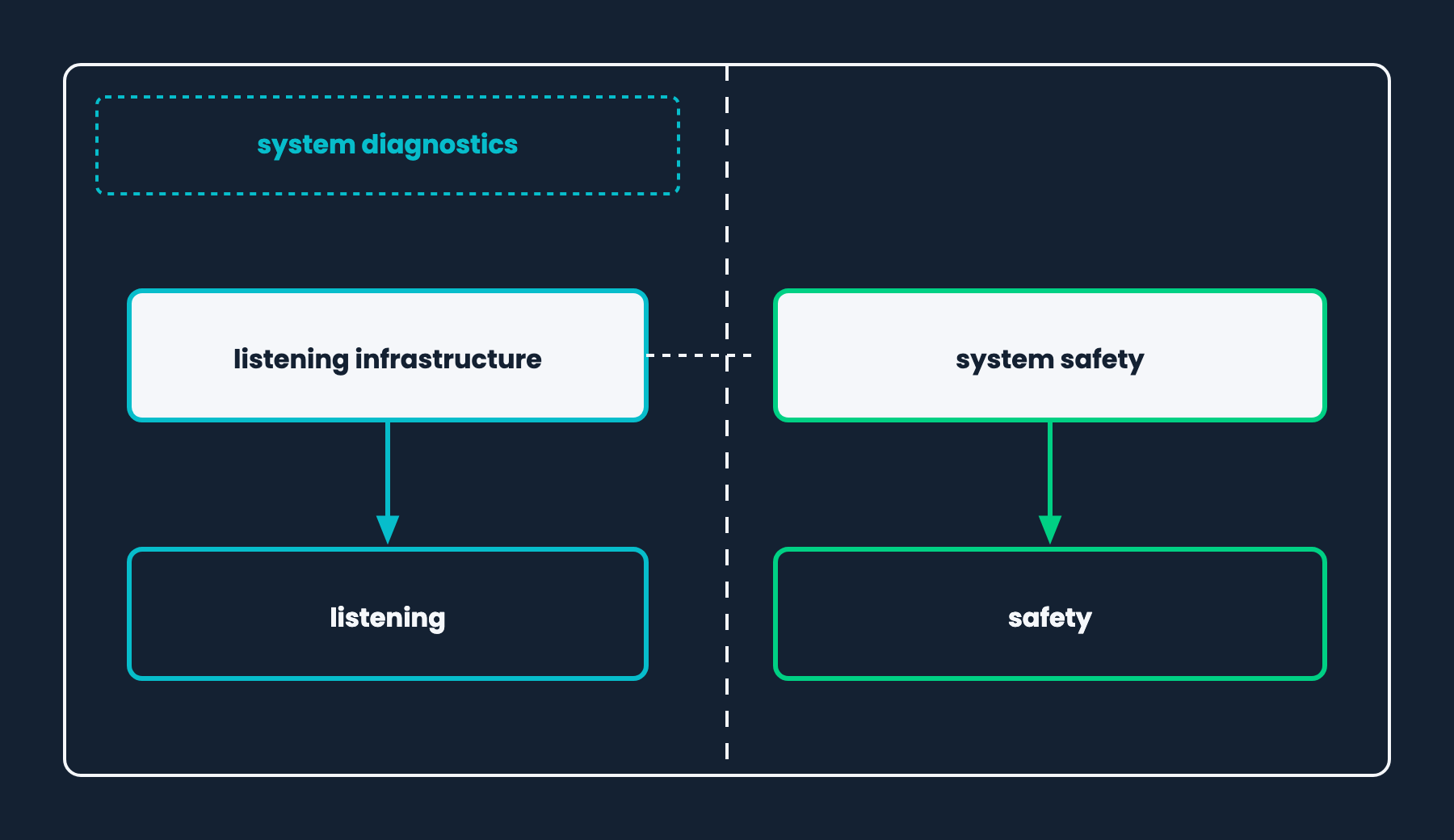
In our previous article, From 47 minutes to 6 seconds, we detailed how listening to the model's inner thoughts saved our platform from endless loops and wasted API spend. When the model itself warns you that its instructions are contradictory, you have to be able to hear it. But if the trace is stripped away, hidden behind proprietary walls, or modified before it reaches your application, you are flying blind.
The illusion of visibility
Relying on a third-party host to filter and summarize reasoning outputs creates a false sense of control. True safety requires examining the intermediate reasoning steps directly, as they happen. If those steps are locked inside a proprietary server, your local safety validation loops cannot intervene when a model strays from its target.
Why hosted traces are a security risk
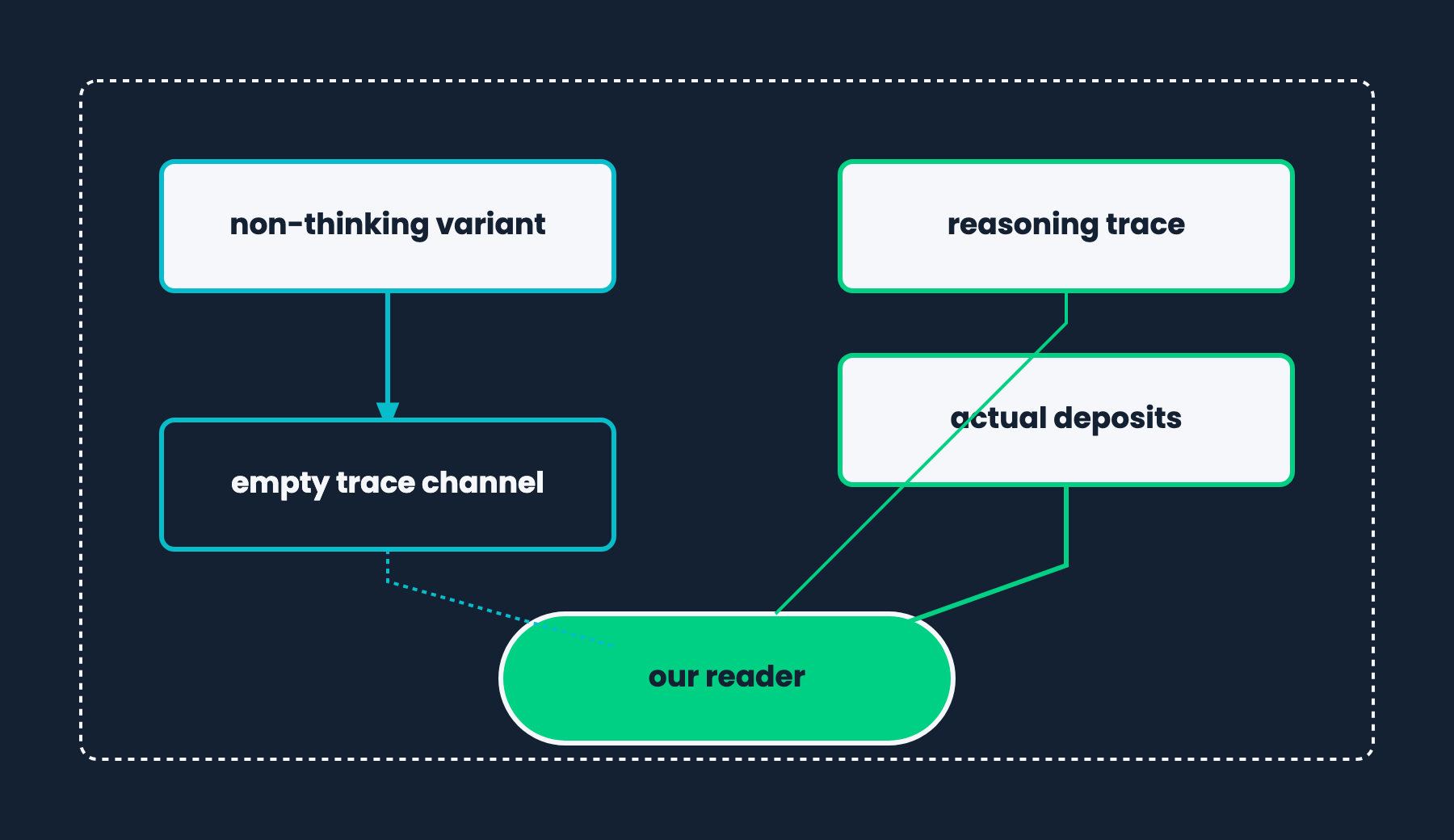
When a model provider hosts the reasoning path and only delivers the final output, they claim it is for safety and performance. By hiding the raw trace, they prevent users from seeing intermediate thoughts that might violate guidelines. But this abstraction strips away your ability to audit the execution. Without a reliable trace reader, you cannot build deterministic interceptors or runtime safety checks.
True ownership means having access to the raw token-by-token reasoning trace as it is generated. This allows us to parse warnings, identify logical deadlocks, and detect when a model is attempting to bypass constraints before any harmful code is written or executed. When we rely on a proprietary API to filter or hide these traces, we hand over our entire runtime security architecture to an external entity whose incentives do not align with our deterministic requirements.
Reclaiming the execution path
To build a resilient agent platform, you must establish strict dependency ordering and trace ownership. This means capturing every reasoning step locally or within an isolated, self-hosted deployment. By establishing a clear sequence of operations, you can verify that the model's internal logic is consistent with the external constraints of your system before executing its proposals.
When we design our agent loops, we enforce a strict dependency hierarchy: reasoning must be fully parsed and validated by a local trace reader before any code synthesis begins. This ordering ensures that contradictions or constraint violations are flagged instantly. We don't wait for a compilation failure; we halt the execution the moment the model's internal monologue flags a structural conflict.
Portable tests for sovereign safety
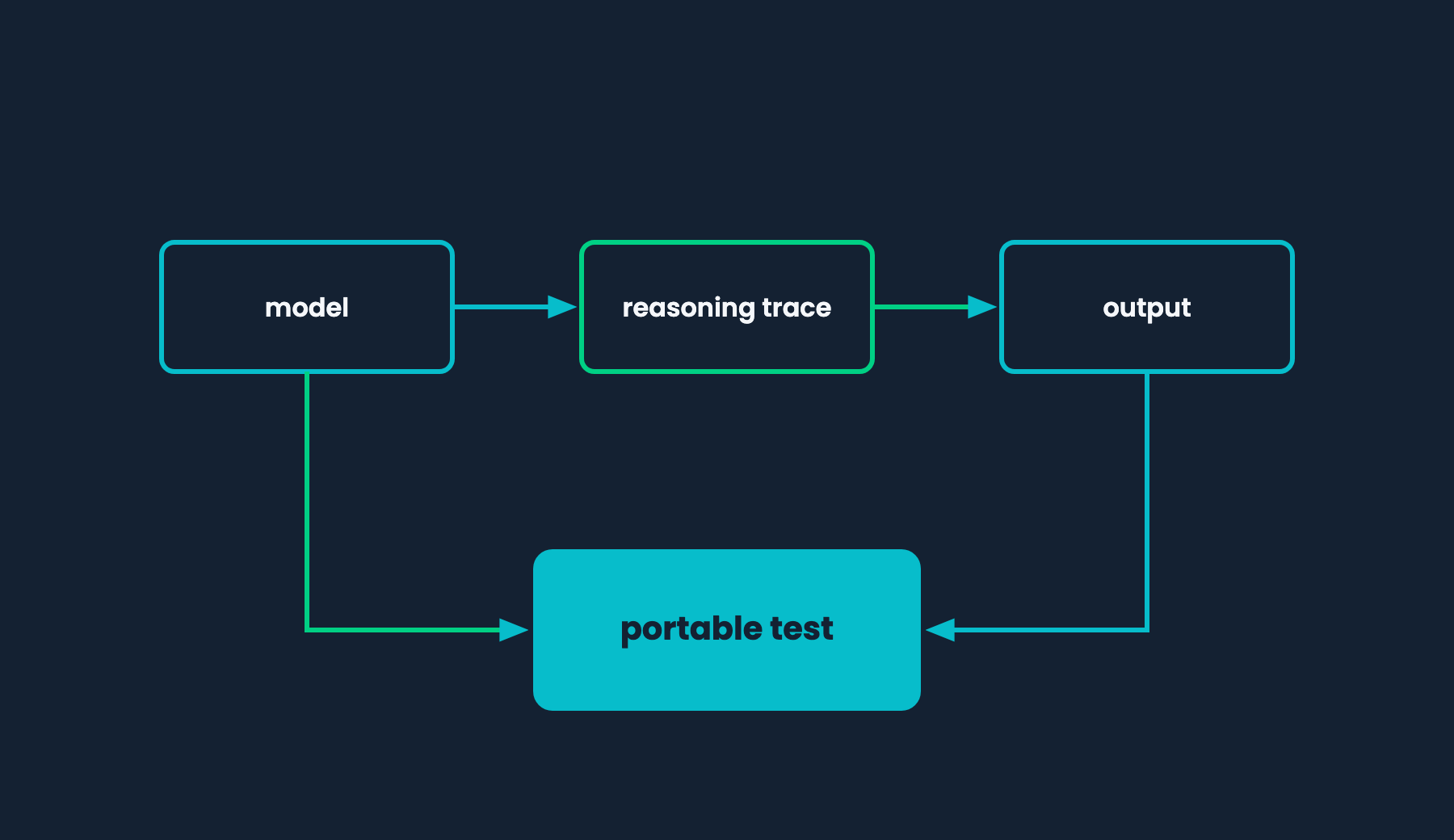
The ultimate defense against reasoning drift is the portable test. By turning safety rules into self-contained, portable verification suites, you can run identical checks across any model, local or remote. These tests do not rely on the model provider's proprietary safety filters; they run on your own infrastructure, evaluating the raw reasoning output against your deterministic specifications.
Sovereign safety is not about building more complex rules; it is about ensuring that you own the execution trace from end to end. By shifting from hosted safety filters to local, portable tests and active trace reading, you protect your system from silent failures and API changes. Don't build your platform on a foundation of thought you can't verify, parse, or control.
Our engineering team is committed to building sovereign, deterministic safety systems that put control back in the hands of the developers. By owning our reasoning traces and enforcing rigorous local checks, we eliminate the silent failures inherent in proprietary, black-box platforms.
Learning rule series · 8 of 10
← LLM-as-a-Judge: Perfect Scores 92% of the Time · A Decision Is Not a Fact →
What this means for your company. A model's stated reasoning is not a verification. The Knowledge Layer keeps the decision, and who made it, outside the model, where it can be checked.
Knowledge Layer →